Showing posts with label CDC. Show all posts

Monday, 25 March 2013

Many babies starting solid foods too early, CDC study says

Many babies starting solid foods too early, CDC study says
Many young children may be switching to solid foods months too early, according to federal researchers.

A new study from the Centers for Disease Control and Prevention (CDC) finds more than 40 percent of parents introduced solid foods to their infants before they were 4 months old. The American Academy of Pediatrics recommends children start eating solid foods when they are between 4 to 6 months of age.

"Clearly we need better dissemination of the recommendations on solid food introduction," study author Dr. Kelley Scanlon, an epidemiologist with the CDC, told The New York Times. "Health care providers need to provide clear and accurate guidance, and then provide support to help parents carry out those recommended practices."

Pediatricians have urged new moms to breast-feed their children exclusively for the first six months of their lives, with supplemental breast-feeding continued over the course of a year once solid foods are introduced.
Generally by the time babies reach 4 to 6 months of age, a child can hold his or her head up in a high chair, open his or her mouth when food comes their way, and weighs enough to (about 13 pounds or more) to be ready for solid foods, according to the academy.

Scanlon and her team analyzed data from about 1,300 mothers who introduced solid foods to their infants during the first year of pregnancy, and were asked the reasons behind their decisions.

Researchers found the highest percentage of infants whose moms introduced solid foods before 4 months were among those who fed exclusively with formula (52.7 percent) and the lowest percentage of those who started early were among infants who were breast-fed exclusively (24.3 percent).

The most common reasons for introducing solid foods early were: "My baby was old enough," "My baby seemed hungry," "I wanted to feed my baby something in addition to breast milk or formula," "My baby wanted the food I ate," "A doctor or other health care professional said my baby should begin eating solid food," and "It would help my baby sleep longer at night."

Moms who were most likely to start solid food too early were younger, unmarried, less-educated or received government assistance through the WIC program.

The research was published March 25 in Pediatrics.

Introducing solid foods too early can cause health risks, according to the researchers, because babies' bodies may not yet prepared for chewing and swallowing. Introducing solid foods too early may also suggest mothers are cutting short breast-feeding. Children who aren't breast-fed are at higher risk for obesity, diabetes, respiratory and ear infections, eczema, and tend to require more doctor visits, hospitalizations and prescriptions, according to the CDC.

Scanlon told HealthDay that pediatricians need to provide accurate, clear messages about appropriate cues feeding, such as, "a baby who's crying a lot isn't always hungry."

Breast-feeding may not stave off childhood obesity like previously thought
CDC: More US mothers are breast-feeding but overall rates still low
Antibiotics for ear infections: Pediatricians release new guidelines
Dr. T.J. Gold, a pediatrician with Tribeca Pediatrics in Brooklyn, told the New York Times some parents who are aware of the best age to feed their infants may be turning to solid foods because they're struggling to make ends meet.

"The formula gets really expensive, especially in the 4-to-6-month window," Dr. Gold said. "And if you have more than one child and you're already preparing food for the whole family, it's much easier to just start sweeping things off your plate."

News Source:  www.cbsnews.com

Saturday, 23 March 2013

Flu took a heavy toll on children this season

Flu took a heavy toll on children this season

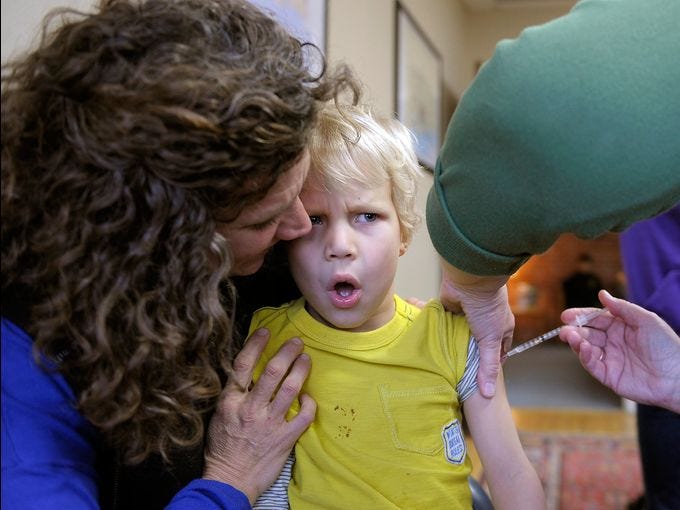
The CDC says 105 children died of the flu this season, emphasizing the importance of vaccinating everyone older than 6 months.

The flu has claimed the lives of 105 children this season, says a report out today from the Centers for Disease Control and Prevention.

Last year, a very mild year for flu, 34 children died, but this year, the deaths were more in line with a typical year. Flu seasons vary greatly in severity. In the 2003-2004 season, 153 children died, according to CDC numbers. The death toll is up to date as of March 16, but Michael Jhung, a medical officer in CDC's Influenza Division, said more deaths are possible: "Flu season is winding down but it's not over."

Of the children who died, 90% had not been vaccinated against the flu. "That's a remarkable number," Jhung said. Though this season's flu vaccine was not particularly effective in those over 65, it worked well in children, he said.

The CDC recommends an annual flu vaccination for everyone over age 6 months. Overall, 52% of all American kids got flu shots this year.

Of the children who died this year, 60% were at high risk from flu complications, either because they were under 2 or had a pre-existing medical condition, the CDC said. "The really telling proportion is the flip side of that: 40% of these deaths were in kids who were healthy," Jhung said.


The high number of children lost to the flu "is just profoundly sad," said William Schaffner, a professor at the Vanderbilt University School of Medicine. "Here we are in the 21st century, and this ancient scourge visits us every year and can still have such a profound effect on our children."

Even with the best hospital care, some children don't survive a bout with the flu, said Schaffner, an infectious disease specialist. "It reminds us that this is a virus that doesn't just involve the throat and the chest," he said. "It involves the whole body."

Though the flu shot is less effective than other common vaccines, getting one reduced the likelihood that a child would need to see a doctor for the flu by 60%, the CDC said. "It's the best one we have," Schaffner said of the flu vaccine. "Every death prevented is worth it."

Flu hit the USA beginning in late October and early November, about a month earlier than usual, Jhung said. It peaked in late December and early January, when it usually peaks towards the end of January and into February. The flu started in the South, hit the Northeast, then worked its way west, but there were weeks where every region had elevated activity.

This season the flu caused "moderately severe" illness, especially in hard-hit places such as Philadelphia, Boston, Chicago and parts of the upper Midwest, Schaffner said. "Several parts of the country were really inundated with it," he said. "They were backed up in the emergency room."

The CDC has tracked flu deaths in children since the 2003-2004 season, when 153 kids died of influenza. Like this year's outbreak, the flu season that year was early and intense.

Influenza is unpredictable, Schaffner said. Last year, the mildest flu season on record, influenza killed 34 children. The H1N1 pandemic killed 348 children from April 15, 2009, to Oct. 2, 2010.

Regina Booth, a Colorado mother, speaks about the importance of flu shots through an advocacy group called Families Fighting Flu. Two years ago, the flu killed her son Austin, a healthy 17-year-old. Before he died, Booth says, her family didn't bother with flu shots.

She said in a written statement, "Now there wouldn't be a flu season that goes by that I wouldn't get my children vaccinated to protect them."

The flu strains that will be in next season's flu vaccine have already been selected and vaccine manufactures are working on them, Jhung said. They will ship in August, and people can begin to get vaccinated in early September.

News Source: www.usatoday.com